projects

Realtime Hydrologic Forecasting

NOAA National Water Model

Our team developed the first national-scale operational hydrological forecasting system for the U.S. National Weather Service. The National Water Model (NWM) provides real-time forecasts of snow, soil moisture, evapotranspiration, inundation, and streamflow over the contiguous U.S., Hawaii, Puerto Rico, and south-central Alaska. The WRF-Hydro-based model has been running in operations on NOAA’s supercomputer since August of 2016.

Additional Resources:

  • NOAA NWM site
  • Cosgrove et al. 2024, NOAA’s National Water Model: Advancing operational hydrology through continental-scale modeling
  • CUAHSI Hydroinformatics blog posting, “Big Data Dreaming! A 42-Year CONUS Hydrologic Retrospective”

Awards:

  • AWRA William Boggess Award for best paper in JAWRA for Cosgrove et al. 2024.
  • NCAR Scientific and Technical Advancement Award for the National Water Model Development Team, 2017
Water Availability

U.S. Geological Survey National Water Availability Assessment

Our team collaborated with the U.S. Geological Survey to develop estimates of water supply across the contiguous U.S. over the past 40 years. When combined with estimates of water use, this assessment highlighted areas of water surplus and deficit, and how this balance evolves over time.

Additional Resources:

Integrated Modeling

Drought Impacts in the Delaware River Basin

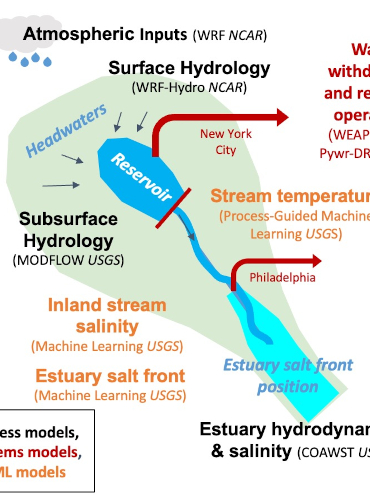
We partnered with the U.S. Geological Survey and Cornell University to understand how the Delaware River Basin water system will respond to drought under changing climate, land use, water use, and sea level drivers. Our integrated modeling approach leveraged a regional climate model (WRF), two hydrologic models (WRF-Hydro, MODFLOW), AI/ML salinity and temperature water quality models, a coastal estuary model (COAWST), and water management models (WEAP, PyWR).

Forest Management

Understanding How Forest Management and Disturbance Impacts Water Supply

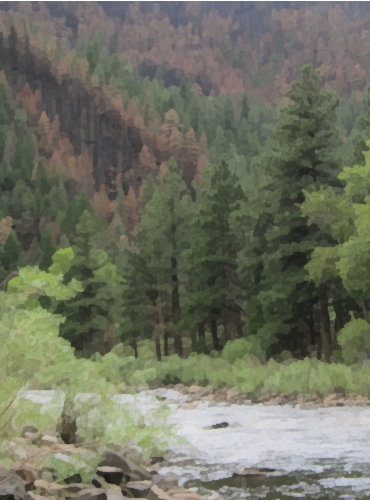
For my PhD research, I used a coupled hydrologic–ecologic model (RHESSys) to assess how forest management and climate change jointly affect streamflow in the Santa Fe Municipal Watershed in northern New Mexico. While most studies examine climate or vegetation impacts separately, my work highlights the importance of their interactions for evaluating water supply vulnerability in semi-arid forest systems. This research was conducted in partnership with Los Alamos National Laboratory, the U.S. Geological Survey, and the Western Mountain Initiative.

Green Infrastructure

Southern California Stormwater Best Management Practices (BMP) Design

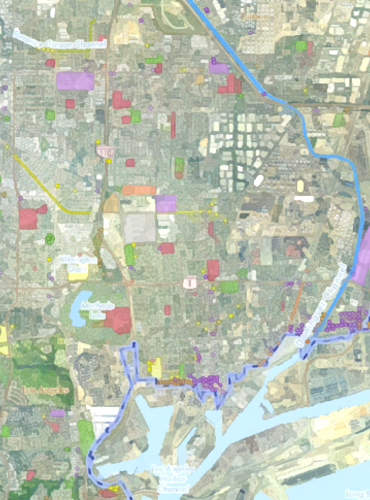
Our team worked with municipalities across Southern California to optimize green infrastructure design to maximize improvements in water quality. Combining geospatial data, stormwater modeling, engineering design databases, and statistics, our tool allowed municipalities to explore scenarios and conduct cost/benefit analyses.

Awards:

  • ASCE MLAB Outstanding Public/Private Sector Civil Engineering Project for the Los Angeles County Structural BMP Prioritization Methodology, 2006